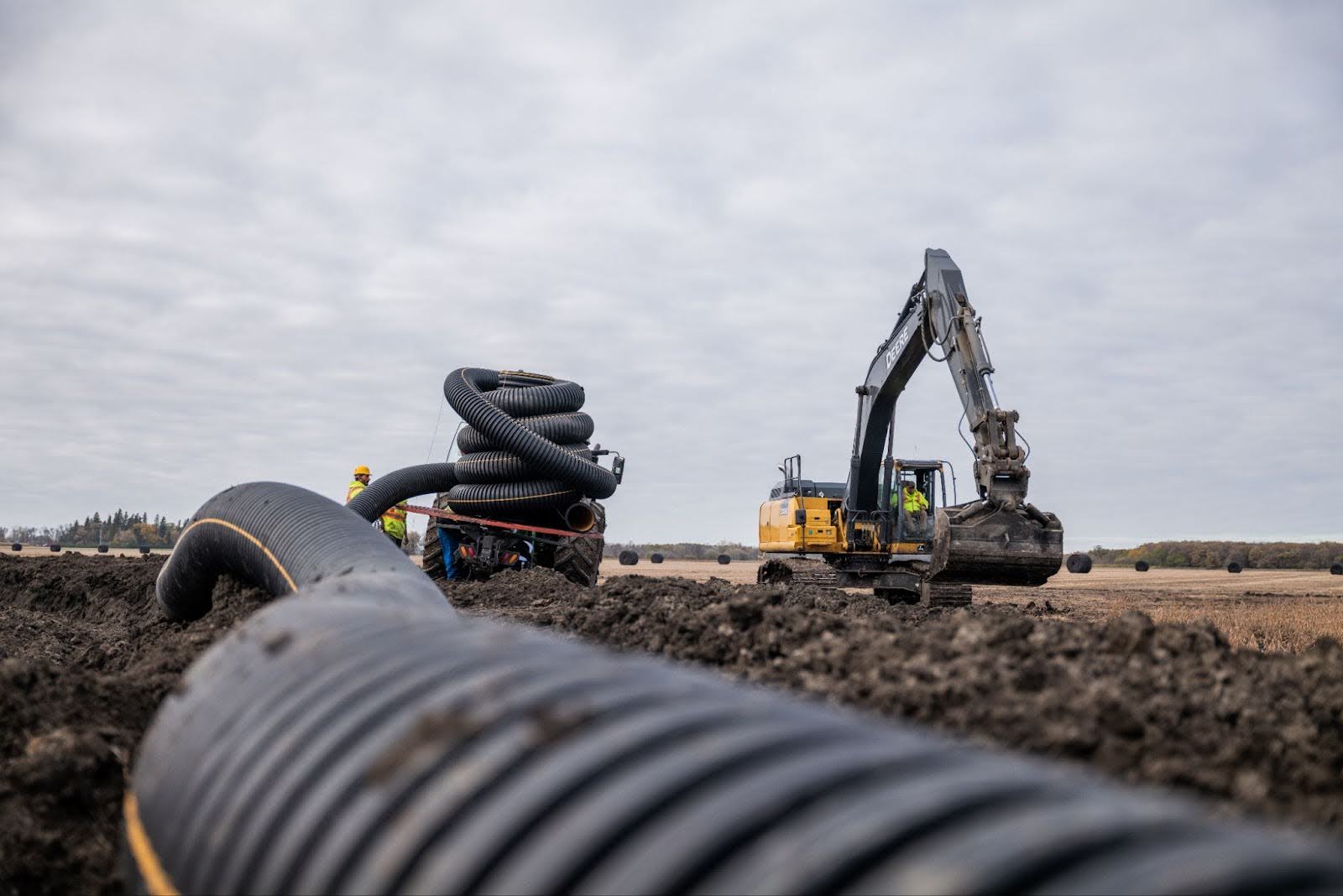
While the upfront cost of tile drainage can deter some producers, Manitoba-based research is proving that the long-term payoff is substantial. With improved yield data, controlled drainage techniques, and real-world case studies, farmers are gaining confidence in this valuable water-management tool.
One of the most significant advancements driving adoption is controlled drainage, a method that allows farmers to regulate how much water passes through the system. As Dr. Ramanathan Sri Ranjan from the University of Manitoba explains, farmers no longer need to drain fields completely - the system can be adjusted to optimize moisture levels throughout the growing season.
Tile drainage can cost between $1,200 and $1,600 per acre, but the investment consistently pays for itself. Ranjan’s research shows returns typically occurring within three to eight years, depending on the crop and field conditions. For moisture-sensitive crops like potatoes and corn, the benefits can be immediate.
Hespler Farms in Winkler, Manitoba, has been a key partner in advancing local drainage research. After installing tile across several fields and participating in long-term studies, the results were clear:
Tile drainage paired with proper irrigation increased potato yields by 30% in the first year.
The success prompted the farm to expand tile drainage across additional acres.
This kind of demonstrable improvement is shifting perceptions across the province. With proven science, measurable returns, and growing expertise, more Manitoba farmers are choosing tile drainage as a long-term solution to excess moisture and unpredictable seasons.
With strong research leadership, rising adoption, and technology that continues to improve, tile drainage is poised to play a major role in the future of Prairie agriculture. As more producers see the benefits firsthand, Manitoba’s tile-drained acres are expected to grow — bringing higher yields, better water management, and more resilient cropping systems.